
Application Development: The NDCON Way
We don’t just build flashy tools. We build systems that work for you.
Phase 1: Requirements and operational design
We map the workflow the application will serve before writing a line of code
Key Outcomes
- Requirements and design documentation
- Application roadmap
Phase 2: Architect and build
Hosted in Canada on AWS ca-central-1 with security and PIPEDA compliance built in
Key Outcomes
- Infrastructure build and validation
- AI-enabled system configuration
Phase 3: Integration, test and iterate
Working with your team to implement, test and ready the deployment
Key Outcomes
- Validation system build-out
Phase 4: Deploy, train and handoff
We’ll prepare the team to take over ownership of the code
Key Outcomes
- AI application deployed to production
- Team is enabled with confidence
Phase 5: Support & maintain
We’ll continue to provide full support services to your team
Key Outcomes
- The team continues to operate the application with confidence and valid use case
Architecture and Hosting
Concrete outcomes, not abstract benefits.
When the engagement is done, the code is yours. No licensing fees, no vendor dependency, no call to make when you want to change something.
Canadian Sovereignty
Every application NDCON builds runs on AWS ca-central-1, which means your data never leaves Canada during processing or storage. PIPEDA compliance is defined at the architecture stage, not reviewed after the fact.
The stack is proven at enterprise scale: ECS Fargate, RDS PostgreSQL, S3, and AWS Bedrock for AI inference. CI/CD pipelines are included so your team can push updates from day one.
No Vendor Lock-In
Most software vendors hand you a login. NDCON hands you the code. Full ownership transfers at delivery, which means no ongoing licensing, no permission required to modify the application, and no single point of failure if the relationship ends.
The application runs on AWS ca-central-1 with PIPEDA compliance built into the architecture, CI/CD pipelines configured for your team, and an enterprise stack that scales with the business. What you build with NDCON is yours to keep, extend, and run.
Technical Confidence
You do not need to evaluate the stack. NDCON builds on the same enterprise infrastructure used by organizations handling sensitive workloads at scale: ECS Fargate for containerized deployment, RDS PostgreSQL for structured data, S3 for file storage, and AWS Bedrock for AI inference, all running on AWS ca-central-1 in Canada.
PIPEDA compliance is defined before a line of code is written. CI/CD pipelines mean your team can deploy updates without calling us. And full code ownership at delivery means the application belongs to your organization, not to its builder.
Canadian Compliance
If your organization handles sensitive data, where your application runs matters as much as how it runs. Every NDCON-built application is hosted on AWS ca-central-1, keeping data on Canadian soil throughout processing and storage. PIPEDA compliance is not a checklist item added before launch.
It is defined at the architecture stage so the data handling policies are baked into how the application works. Add CI/CD pipelines, an enterprise-grade stack, and full code ownership at delivery, and you have an application built to meet Canadian compliance requirements without trading off capability or control.
- Faster time-to-value
- Full code ownership
- Seamless integration
What Makes Working With Us, Different
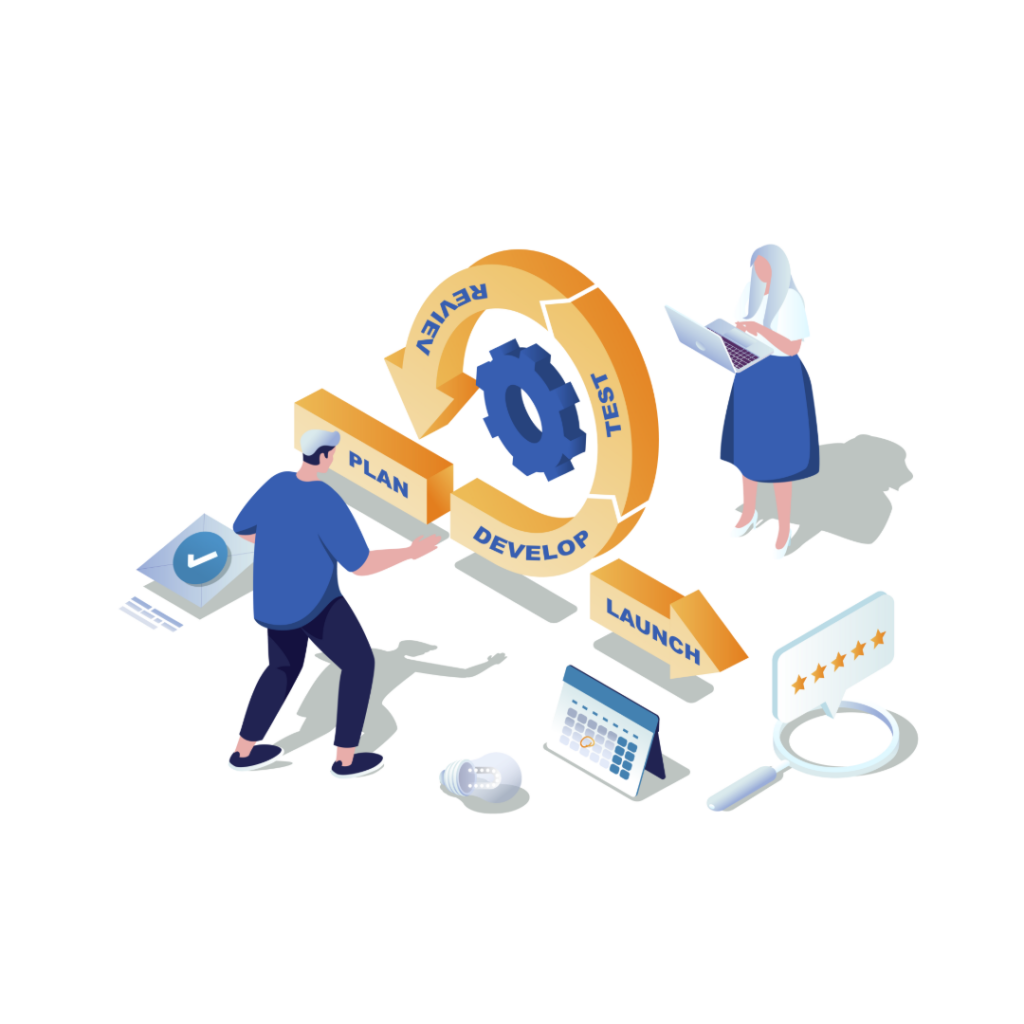
Most development shops build what you ask for.
NDCON starts by understanding how the application needs to fit into the way your business actually operates. An application that does not connect to your workflows, your data, and your team’s day-to-day reality will not get used no matter how well it is built.
Every application we design can be architected with AI embedded from day one, not retrofitted onto an existing system after the fact. Your data can stay in Canada throughout, compliance is defined before the build begins, and when we hand over the code at delivery, you own it completely.
No licensing dependency, no ongoing relationship required to keep the lights on, and no black box you cannot look inside. We build it, we transfer it, and we make sure your team knows how to run it.