
Secure Data Migration for Canadian Businesses and Organizations
Migration Types We Handle
Migration tools and pipelines are configured to enforce Canadian residency as a technical constraint, not just a policy commitment. NDCON’s migration methodology maps, validates, and transfers your data with zero data loss and zero unplanned downtime, with your data staying in Canada throughout the entire process.

CRM Migrations
Moving CRM data is not a simple export and import. Contact history, deal timelines, activity logs, and pipeline relationships carry the institutional memory of how your business has operated. NDCON moves that data between platforms, whether from Salesforce, HubSpot, or another system, without losing the records or the context that makes them useful on the other side.
Database Migrations
Legacy and on-premise databases hold data that the business depends on, often in structures that have accumulated years of complexity. NDCON lifts that data to cloud-hosted PostgreSQL or your target system of choice, mapping and transforming it along the way so what arrives is clean, structured, and ready to use, not a replica of the problem you were trying to leave behind.
Cloud Migrations
Moving from on-premise infrastructure or a cloud environment outside Canada to AWS ca-central-1 or Azure is not just a technical exercise. It is an opportunity to get the architecture right. NDCON migrates your applications, data, and workloads with Canadian data residency built in from the first environment provisioned, not added as a configuration after the fact.
Cross-Platform Data Synchronization
Not every migration ends with a single system. When two platforms need to stay in sync after a migration, NDCON builds the data bridges that keep them aligned, with monitoring in place to catch failures before they produce inconsistencies that ripple across the business.
Canadian Data Residency
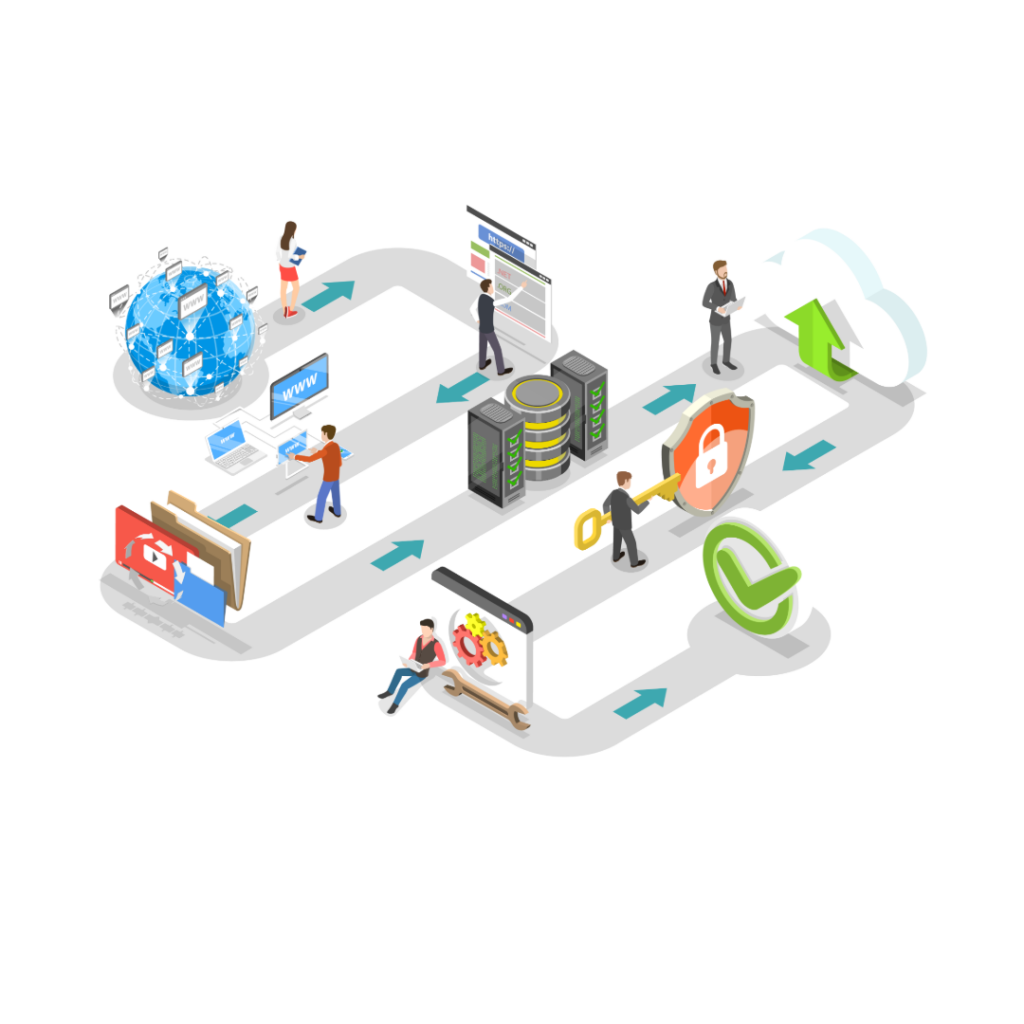
Most migration tools move data through whatever infrastructure is fastest or cheapest, which often means routing through servers outside Canada. NDCON treats Canadian data residency as a technical constraint, not a policy statement. Every stage of the migration, including staging, transformation, and validation, happens within Canadian data centres. No data is processed through infrastructure outside Canada at any point, and the pipelines are configured to enforce that boundary rather than rely on someone remembering to check.
Onboarding Process
We inventory what exists, where it lives, what condition it is in, and what the target schema requires
We identify duplicates, gaps, formatting inconsistencies, and mapping conflicts before migration begins, not after
We define the rules for how source data maps to the target system, including any cleansing, normalization, or enrichment required
We run a full migration against a non-production environment and validate the output against agreed acceptance criteria
Scheduled to minimize operational disruption. Rollback plan defined and ready before we begin
Post-migration validation against the source data with a documented reconciliation report before any legacy system is decommissioned